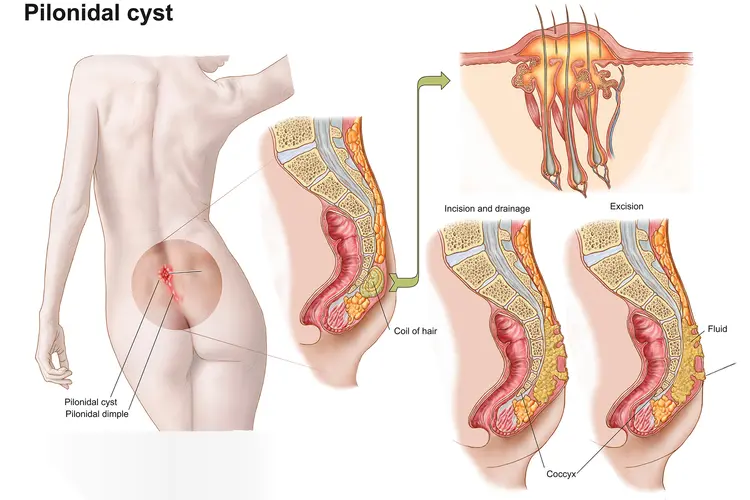
PILONIDAL SURGERY
Pilonidal disease refers to a condition where a small pit or cyst forms in the skin at the top of the buttock crease (natal cleft), often triggered by loose hairs becoming trapped beneath the skin. This can lead to recurring infection, abscess formation, and chronic discharge, causing ongoing pain and discomfort for many patients. While minor cases can sometimes be managed conservatively, recurrent or persistent pilonidal disease typically requires surgical treatment.
At LIFEXCLINICS, pilonidal surgery is performed by Dr Robert George, a Specialist Soft Tissue Surgeon (MBBS MS FRACS), who tailors the surgical approach to the extent and history of the condition, with a focus on minimising recurrence.
Signs and symptoms:
Common signs of pilonidal disease include:
- Pain or swelling at the top of the buttock crease
- A visible pit, dimple, or small opening in the skin
- Recurrent redness, swelling, or abscess formation in the area
- Discharge of pus or blood from the affected area
- Discomfort when sitting for extended periods
- Recurrent infections in the same location over time
Treatment options:
Depending on the severity, frequency, and history of your condition, treatment may include:
- Incision and drainage — used to manage an acute abscess, relieving pain and infection in the short term, though this alone does not address the underlying cause
- Surgical excision — removal of the affected pit and surrounding diseased tissue, aimed at reducing the risk of recurrence
- Flap procedures — for more extensive or recurrent disease, reconstructive techniques may be used to close the wound and change the contour of the natal cleft, reducing the likelihood of the condition returning
During your consultation, Dr George will assess the extent of your condition and history of previous episodes to determine the most appropriate surgical approach for you.
The procedure and recovery:
Pilonidal surgery can range from a relatively minor procedure to a more involved reconstructive approach, depending on the extent of disease. Recovery time varies accordingly, and you'll be provided with detailed aftercare instructions covering wound care, hygiene, and activity restrictions to support healing and reduce the risk of recurrence.
Your consultation:
Every pilonidal surgery begins with a thorough consultation, where your history of symptoms, previous treatments, and the extent of your condition are assessed. Dr George will explain the recommended surgical approach, expected recovery, and potential risks, so you feel fully informed before proceeding.
A personalised approach:
Pilonidal disease varies significantly in severity and recurrence risk between patients, which is why treatment at LIFEXCLINICS is planned on an individual basis. Dr Robert George's focus is on effective, well-considered surgical management aimed at long-term resolution, supported by our clinical team, throughout your journey from consultation to recovery.
Request an Appointment
BREAST AUGMENTATION SURGERY
From just $9000
Dr Robert George has helped many satisfied patients with breast augmentations, breast reconstructions and restorations, breast lifts, breast reductions, breast implant removals and breast revisions. During your private consultation, Dr Robert George will evaluate your needs to determine the best outcomes to fit your daily activities and to achieve the aesthetics you desire.